As an Amazon Associate, I earn from qualifying purchases.
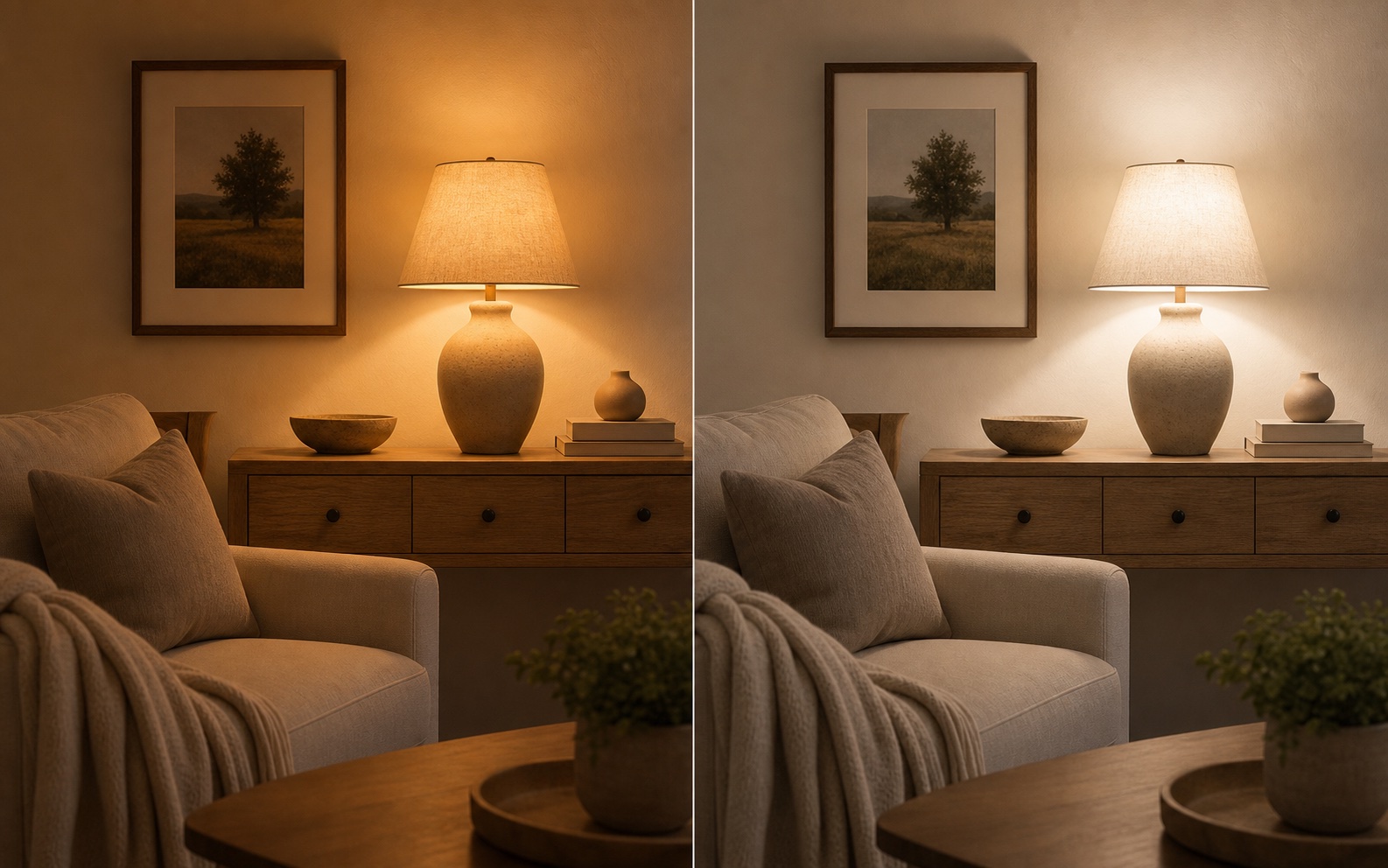
Two lamps can look almost identical when they are switched off and make a room feel completely different when they are on.
The reason is often the bulb.
Color temperature affects whether a room feels golden and intimate or clean and quietly practical. Brightness, color rendering, the shade and dimmer compatibility matter too, but choosing between 2700K and 3000K is the simplest place to begin.
The Short Answer: 2700K or 3000K?
- Choose 2700K for bedrooms, living rooms and evening corners where softness is the priority.
- Choose 3000K for reading lamps, dressing areas and mixed-use rooms where you want warm light with slightly clearer visibility.
- Choose a tunable-white bulb when the same lamp needs to support both focused tasks and a slower evening atmosphere.
For most cozy homes, start with dimmable 2700K bulbs in the main evening lamps. Add 3000K only to task lights that genuinely need more clarity.
2700K vs 3000K at a Glance
| Feature | 2700K | 3000K |
|---|---|---|
| Appearance | Soft, golden warm white | Cleaner, lighter warm white |
| Best for | Winding down and atmosphere | Reading and mixed-use spaces |
| Rooms | Bedroom, living room, cozy corners | Reading nook, dining area, dressing area |
| Works well with | Linen, dark wood, cream, terracotta | Pale wood, white walls, neutral work surfaces |
| Possible drawback | Can look too yellow for detailed tasks | Can feel less intimate at night |
Neither temperature is universally better. The right choice depends on what you do in the room, the colors around it and how the light passes through the shade.
What Kelvin Actually Means
Kelvin, shown as K, describes the visual color of the light. It does not tell you how bright the bulb is.
Lower numbers appear warmer and more amber. Higher numbers appear cooler and more blue-white.
A simple household guide:
- 2200K-2400K: very warm and candle-like
- 2700K: familiar warm household light
- 3000K: warm, but cleaner and less golden
- 4000K: neutral to cool white
- 5000K and above: daylight-like appearance
The difference between 2700K and 3000K is subtle, especially in daylight. It becomes more noticeable after dark and when two bulbs are used in the same room.
Best 2700K Bulb Type for a Cozy Evening
Look for a dimmable A19 LED bulb with:
- the correct base for your fixture
- 2700K color temperature
- 90+ CRI when available
- suitable lumens for the shade and room
- explicit dimmer compatibility when required
This type works well in bedside lamps, linen shades, living-room table lamps and shaded floor lamps.
Best 3000K Bulb Type for Clearer Warm Light
A 3000K bulb remains warm, but white paper, pale walls and detailed objects often look a little clearer than they do under 2700K.
It suits a reading lamp, a bedroom desk, a dressing area or a dining space that is used for more than atmosphere.
When a Tunable-White Bulb Is Better
Some rooms change purpose throughout the day. A bedroom may also contain a desk. A living-room lamp may support reading at 7 p.m. and quiet conversation later at night.
A tunable-white smart bulb can shift between clearer and softer warm light without replacing the bulb. It is useful when you will actually use the controls; otherwise, a simple dimmable bulb is usually easier.
How These Recommendations Were Chosen
This guide prioritizes bulb characteristics rather than a changing list of fashionable products:
- a warm range suitable for a calm home
- dimmability where it adds useful control
- 90+ CRI when available
- common household bulb shapes
- clear compatibility information
- a distinct use case for each option
Soft Moon Studio has not laboratory-tested every bulb represented above. The images are educational lifestyle illustrations, not photographs of exact Amazon products. Specifications and availability can change, so verify the current product page before ordering.
Lumens Tell You How Bright the Bulb Is
Watts describe energy use. Lumens describe brightness.
As a rough starting point:
- 200-450 lumens: accent light or a very small lamp
- 450-800 lumens: common table-lamp range
- 800-1100 lumens: brighter task or general lighting
The shade changes how much light reaches the room. A dark or tightly woven shade may need more lumens than pale linen or frosted glass.
Do not automatically choose the brightest bulb the fixture allows. Several moderate pools of light usually feel calmer than one intense lamp. Read How to Layer Lighting for a Cozy Home for the full method.
Why CRI Matters
CRI stands for Color Rendering Index. It indicates how naturally colors appear under a light source.
A bulb with 90+ CRI is worth considering when you care about skin tones, art, wood and textiles looking natural. CRI does not tell you whether the bulb is warm or cool, so check CRI and kelvin separately.
Dimmable Does Not Always Mean Compatible
If your lamp or wall switch uses a dimmer, choose a bulb specifically marked dimmable. Even then, some bulb-and-dimmer combinations may flicker, hum or have a limited dimming range.
Check:
- whether the fixture has a built-in dimmer
- whether the bulb is explicitly dimmable
- whether the manufacturer lists compatible dimmer types
- the fixture’s maximum wattage
- the correct base and physical bulb dimensions
Never exceed the fixture’s stated electrical limits.
The Shade Can Change What You See
A cream linen shade can make 3000K appear warmer. Frosted glass diffuses glare. A colored or dense shade can tint the light and reduce brightness.
Test one bulb in the actual lamp before replacing every bulb in the room. Judge it after sunset, from the place where you normally sit or lie down.
Should Every Bulb in a Room Match?
The main evening lamps usually feel more coherent when their color temperatures are close. A 2700K table lamp beside a cool-white ceiling fixture can make both look harsher by contrast.
They do not have to match perfectly. A 3000K reading lamp can work beside softer 2700K ambient light when each source has a clear purpose. Avoid mixing several random temperatures with no visual hierarchy.
Room-by-Room Recommendations
| Room or use | Starting temperature | Why |
|---|---|---|
| Bedroom | 2700K | Softer atmosphere before sleep |
| Living room | 2700K | Warm, relaxed general evening light |
| Reading corner | 3000K | Clearer page visibility while staying warm |
| Dining area | 2700K or 3000K | Choose atmosphere or clearer mixed use |
| Dressing area | 3000K with high CRI | Cleaner visibility and more natural colors |
| Multi-use lamp | Tunable white | Adjusts as the purpose changes |
Frequently Asked Questions
Is 2700K too yellow?
It can look golden in a white room or through a cream shade, but many people experience it as familiar warm household light. Test it in the actual fixture before judging.
Is 3000K still considered warm white?
Yes. It is generally considered warm white, although it appears cleaner and less golden than 2700K.
Which is better for reading?
3000K often gives printed pages slightly clearer contrast while remaining warm. Direction, brightness and glare control matter at least as much as color temperature.
Can I mix 2700K and 3000K in one room?
Yes, when they serve different purposes. Use 2700K for ambient light and 3000K for a focused task lamp. Avoid placing mismatched bulbs side by side in identical fixtures.
Does dimming a bulb make it warmer?
Not automatically. Many LED bulbs become less bright without changing color temperature. A “dim-to-warm” or tunable-white bulb is required when you want the light to become warmer as it dims.
The Safest Starting Point
Start with one dimmable 2700K, 90+ CRI LED bulb in the lamp you use most at night. If it feels too golden for reading or detailed tasks, try 3000K in that specific task lamp.
Then adjust placement and brightness before replacing every bulb. For a complete room plan, continue with Cozy Bedroom Lighting Ideas Without the Overhead Light or the broader cozy lighting buying guide .