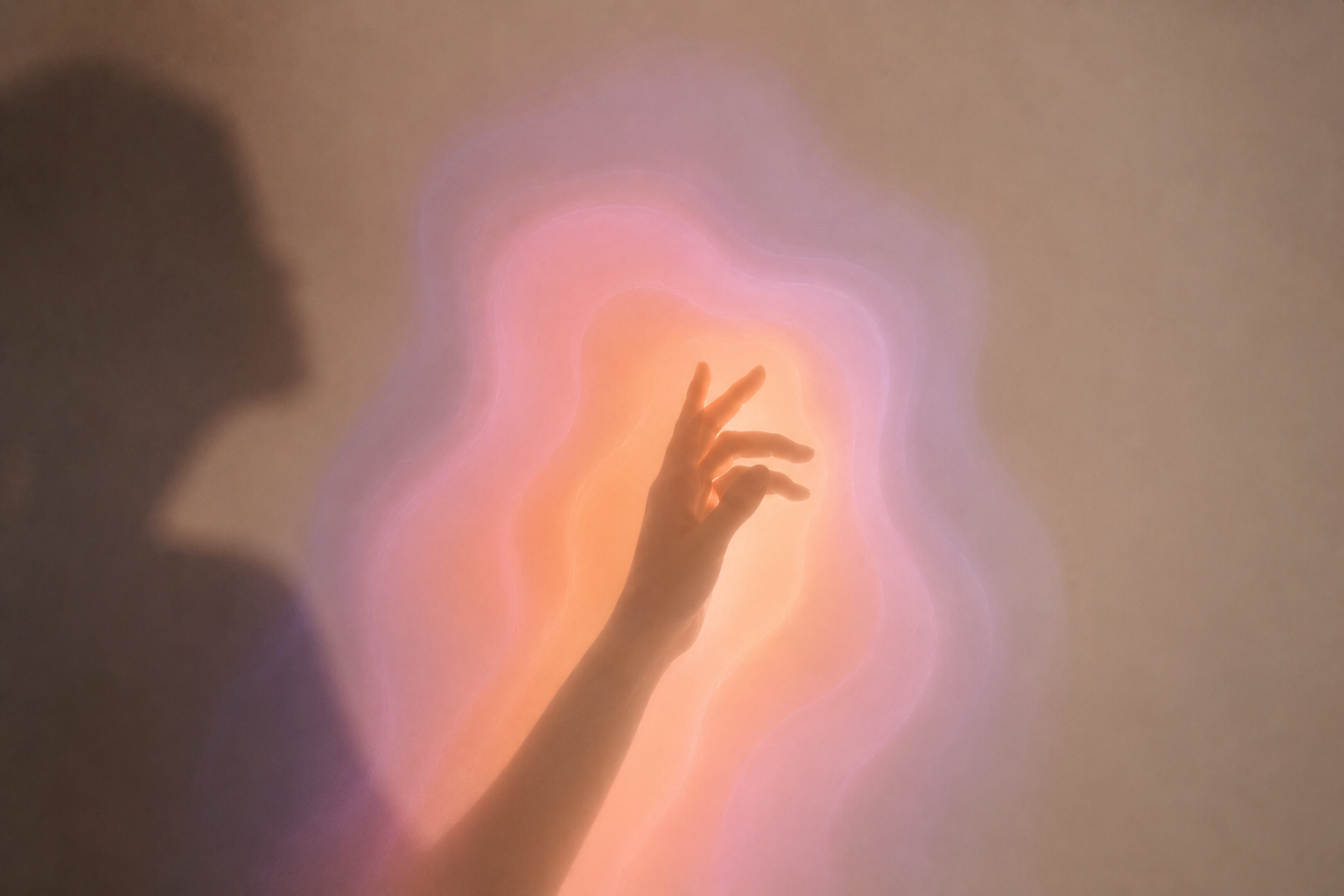
There are people we forget almost immediately.
And then there are people we remember for years.
Not because they were the loudest person in the room. Not because they were exceptionally beautiful, successful or charismatic.
Sometimes it is quite the opposite.
Sometimes the people who stay with us are the ones who seemed calm, grounded or quietly present in a way that is difficult to explain.
Most of us have met someone like this at least once.
Perhaps it was a teacher who made you feel understood. A friend whose presence always seemed comforting. A stranger you spoke to for only a few minutes but somehow never forgot.
Whatever the situation, the experience often leaves us with the same question:
What is it about certain people that feels so different?
Psychology offers several possible answers. Facial expression, tone of voice, body language, emotional intelligence and life experience all influence how we perceive one another. Research into rapid first impressions also suggests that people form interpersonal judgments from remarkably brief observations.
Spiritual traditions offer another framework: the idea that human beings carry an energetic presence sometimes described as an aura.
What Is a Human Aura?
In modern spiritual traditions, an aura is often described as an energetic field surrounding a living being.
Different belief systems explain this idea in different ways. The shared theme is that human presence may extend beyond what can be understood from appearance or spoken words alone.
Aura readers often interpret this field as a reflection of a person’s emotional, mental or spiritual state. Some believe an aura changes over time, while others describe a combination of enduring qualities and temporary influences.
A person’s energy might therefore be interpreted differently during periods of stress, grief, healing, growth or major life transition.
These interpretations are spiritual and symbolic. Human auras have not been scientifically established as visible colored energy fields.
Yet the underlying idea remains compelling: people carry an atmosphere into the spaces they enter.
Why the Idea Still Fascinates People
You do not need to believe in literal auras to understand why the subject continues to capture people’s imagination.
Most of us have experienced moments that feel surprisingly difficult to explain.
Have you ever entered a room and noticed tension before anyone said a word?
Have you ever met someone who made you feel comfortable within minutes, despite being a complete stranger?
Have you ever left a conversation feeling unexpectedly drained, inspired or uplifted?
Experiences like these are part of being human. Psychology can explain much through social cues, mood, memory and interpersonal perception. Aura traditions provide a symbolic language for exploring the felt quality of those encounters.
Their appeal may have less to do with proving the existence of invisible colors and more to do with understanding the subtle ways people affect one another.
What Aura Readers Believe
Many aura readers believe every person carries a distinctive energetic signature.
Some describe perceiving colors around the body. Others say their experience is intuitive rather than visual: an impression, emotion or symbolic association connected with someone’s presence.
Within these traditions, colors are commonly associated with different qualities:
- Red with vitality and determination
- Orange with creativity and expression
- Yellow with confidence and curiosity
- Green with compassion and growth
- Blue with communication and emotional depth
- Purple with intuition and imagination
- White with clarity and transformation
Experienced practitioners do not always describe a person as having only one color. An aura may instead be seen as layered and dynamic, with different colors becoming more prominent during different stages of life.
This flexibility is one reason the idea can feel appealing. It leaves room for human complexity rather than reducing a person to one category.
Can You Actually See Auras?
This is the most controversial part of aura reading.
Some practitioners believe people can learn to perceive auras through soft focus, peripheral vision and sustained observation. Others believe aura perception is mainly intuitive and does not involve seeing literal colors.
From a scientific perspective, there is currently no accepted evidence that colorful energy fields surrounding the body can be objectively observed in the way aura traditions describe.
That does not make the human experiences behind the idea uninteresting.
Why do certain people feel calming while others feel overwhelming? Why do some environments feel restorative while others feel draining? Why do we sometimes form strong impressions before someone has revealed much about themselves?
These questions remain worth exploring, even when we keep spiritual interpretation and scientific evidence clearly separate.
Aura Colors as a Tool for Reflection
One of the biggest misconceptions about aura colors is that they should function as fixed personality labels.
Online lists often reduce complex people to a single color and a handful of traits. A more thoughtful approach treats the colors as symbolic rather than absolute.
Someone who resonates with blue may recognise a desire for honesty and meaningful communication. Someone drawn to green may recognise a strong instinct to care for others. A person who identifies with yellow may see themselves in curiosity, learning and personal growth.
The value lies less in whether a color is objectively “correct” and more in whether the reflection creates useful insight.
Continue with What Color Is My Aura? for a gentle introduction to the seven colors most often described in modern aura traditions.
Why the Energy You Carry Matters
Whether you view auras as literal energy fields or symbolic tools for reflection, there is value in becoming more aware of your presence.
Every person influences the spaces they enter.
We affect conversations through our mood. We shape relationships through our actions. We leave impressions through the attention and energy we bring into ordinary interactions.
Most of the time, we are more focused on how the world affects us than on how we affect the world.
Aura traditions invite us to reverse that perspective.
What kind of presence do I bring into a room?
How do people feel after spending time with me?
What qualities do I naturally share with others?
What energy am I cultivating within myself?
These questions remain meaningful whether or not you believe in aura colors.
A Gentle Reflection
Perhaps aura traditions have endured because they point toward something many of us already sense.
Human beings are more than a collection of facts, achievements and personality traits. There is a quality to presence that cannot always be measured, yet can feel unmistakably real.
We remember how people make us feel.
We notice the atmosphere they create.
We recognise when someone brings warmth, calmness, creativity or compassion into our lives.
Aura readers describe these qualities through the language of energy and color. Others use different words.
The underlying curiosity remains the same:
What makes each person uniquely themselves, and what kind of presence do we leave behind when we walk out of a room?
Continue Exploring Aura Energy
Free Reflection Workbook
Start gently with questions about energy and presence.
Download Free WorkbookFull Aura Guide
Go deeper into aura colors, energetic presence and why some people seem to glow.
Explore The Full GuideSources used for this article
- Thin Slices of Expressive Behavior as Predictors of Interpersonal Consequences — Psychological Bulletin